
Wheel BALANCING
What is Wheel Balancing?
Wheel balancing is a crucial maintenance procedure that ensures the weight of your vehicle’s wheels is evenly distributed around the axle. This process eliminates vibrations, provides a smoother ride, and extends the life of your tires. Proper wheel balancing involves attaching small weights to the wheel to counteract any imbalances detected during the process.
Benefits of Proper Wheel Balancing
- Smooth Driving Experience: Balancing the wheels eliminates vibrations, providing a smoother and more comfortable ride for passengers.
- Tire Longevity: Correctly balanced wheels prevent uneven tire wear, extending the life of your tires and maximizing their performance.
- Improved Fuel Efficiency: Reduces rolling resistance, which can improve fuel efficiency and save you money on gas.
- Enhanced Vehicle Performance: Ensures better handling and stability, improving overall vehicle performance.
Signs You Need Wheel Balancing
- Vibration in the Steering Wheel: Feeling vibrations in the steering wheel, especially at higher speeds, often indicates unbalanced wheels.
- Uneven Tire Wear: Irregular or rapid tire wear can be a sign that your wheels are out of balance.
- Vehicle Vibration: Noticeable vibrations in the seat or floorboard while driving.
- Handling Issues: Difficulty steering or a feeling of instability while driving can be caused by unbalanced wheels.
Our Wheel Balancing Process
1. Initial Inspection:
- Tire and Wheel Check: We inspect your tires and wheels for any visible damage or wear and tear.
2. Mounting on Balancing Machine:
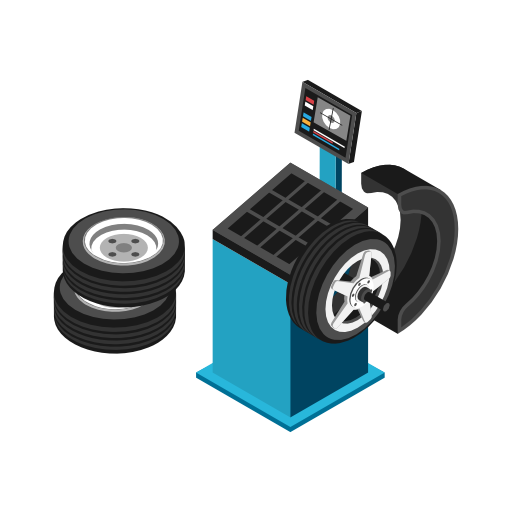
- Precision Mounting: Each wheel is mounted on a state-of-the-art balancing machine that spins the wheel to identify any imbalances.
3. Identifying Imbalance:
- Detection of Weight Imbalances: The machine detects weight imbalances by measuring the vibration produced when the wheel spins.
4. Applying Weights:
- Adding Correction Weights: Small weights are added to the wheel to counteract the imbalance. These weights are precisely placed to ensure even weight distribution.
5. Final Inspection:
- Verification: After adding the weights, the wheel is spun again to ensure it is balanced correctly. We make any necessary adjustments until the wheel is perfectly balanced.
6. Re-Mounting Wheels:
- Re-Installation: The balanced wheels are re-mounted onto your vehicle, ensuring everything is securely fastened and ready for the road.
Why Choose Us for Wheel Balancing?
- Expert Technicians: Our certified technicians have extensive experience in wheel balancing and use the latest equipment to ensure precision.
- Advanced Equipment: We utilize state-of-the-art balancing machines to provide accurate and efficient service.
- Customer Satisfaction: We are dedicated to providing exceptional service and ensuring your complete satisfaction with our work.
Frequently Asked Questions (FAQs)
What is the difference between wheel balancing and wheel alignment?
Wheel balancing corrects weight imbalances in the wheels, while wheel alignment adjusts the angles of the wheels to the manufacturer’s specifications.
How often should I get my wheels balanced?
It’s generally recommended to balance your wheels every 5,000 to 6,000 miles or whenever you notice signs of imbalance.
It’s generally recommended to balance your wheels every 5,000 to 6,000 miles or whenever you notice signs of imbalance.
Yes, unbalanced wheels can lead to uneven tire wear, reduced fuel efficiency, and strain on the vehicle’s suspension and steering components.